4.9★★★★★on GoogleFamily run, open 24/7, across Epping and Essex4.9★★★★★on GoogleFamily run, open 24/7, across Epping and Essex
Jayden Hutchings
November 1, 2026
Kitchen refit waste can go 2 ways: a skip that sits on the drive while the work goes on, or a van that clears the lot in 1 visit once the old kitchen is out. Neither is always cheaper. A skip suits a refit that runs over weeks with waste coming out a bit at a time. A loaded van suits a job where the old kitchen comes out in 1 or 2 days and you want the pile gone without lifting it yourself. This guide goes through what a kitchen refit actually throws out, the Essex rules for skips and the tip, and how to work out which route fits your job.
A kitchen fills a room twice: once with the old fittings coming out and again with the packaging from the new ones. When we clear after a kitchen strip out, the pile usually holds:
Carcasses and packaging take up a lot of space but weigh little. Tiles, plaster and rubble are the opposite: small piles that weigh a lot. That mix changes how a load is priced, whichever route you choose.
A skip earns its keep on a long project. If your kitchen refit is spread over several weeks, with the old units out in week 1, a wall coming down in week 2 and the floor up in week 3, a skip lets you and your fitter throw things in as you go without anyone coming back each time.
It also suits a job where you have the time and the help to fill it yourself, and a good flat spot on the drive to keep it on. If that sounds like your refit, hire a skip. You can still call us for the bits that should not go in it, or for whatever is left over once it has gone.
Before you book, ask the skip firm for its list of items it will not take, and check it against what your refit will throw out. Ask about old appliances first, because most kitchen refits leave at least 1 behind.
If there is no room on the drive, the skip ends up on the road, the pavement or the verge, and that needs a licence from Essex Highways. As read on the Essex Highways skips and scaffolding page on 1 November 2026:
So if your fitter is starting next Monday and the drive is full, a road skip may not be in place in time. Ask the skip firm about the licence when you book, and build that 10 working days into your plan. A refit that overruns can also mean renewing the licence, so check whether the skip firm charges for that.
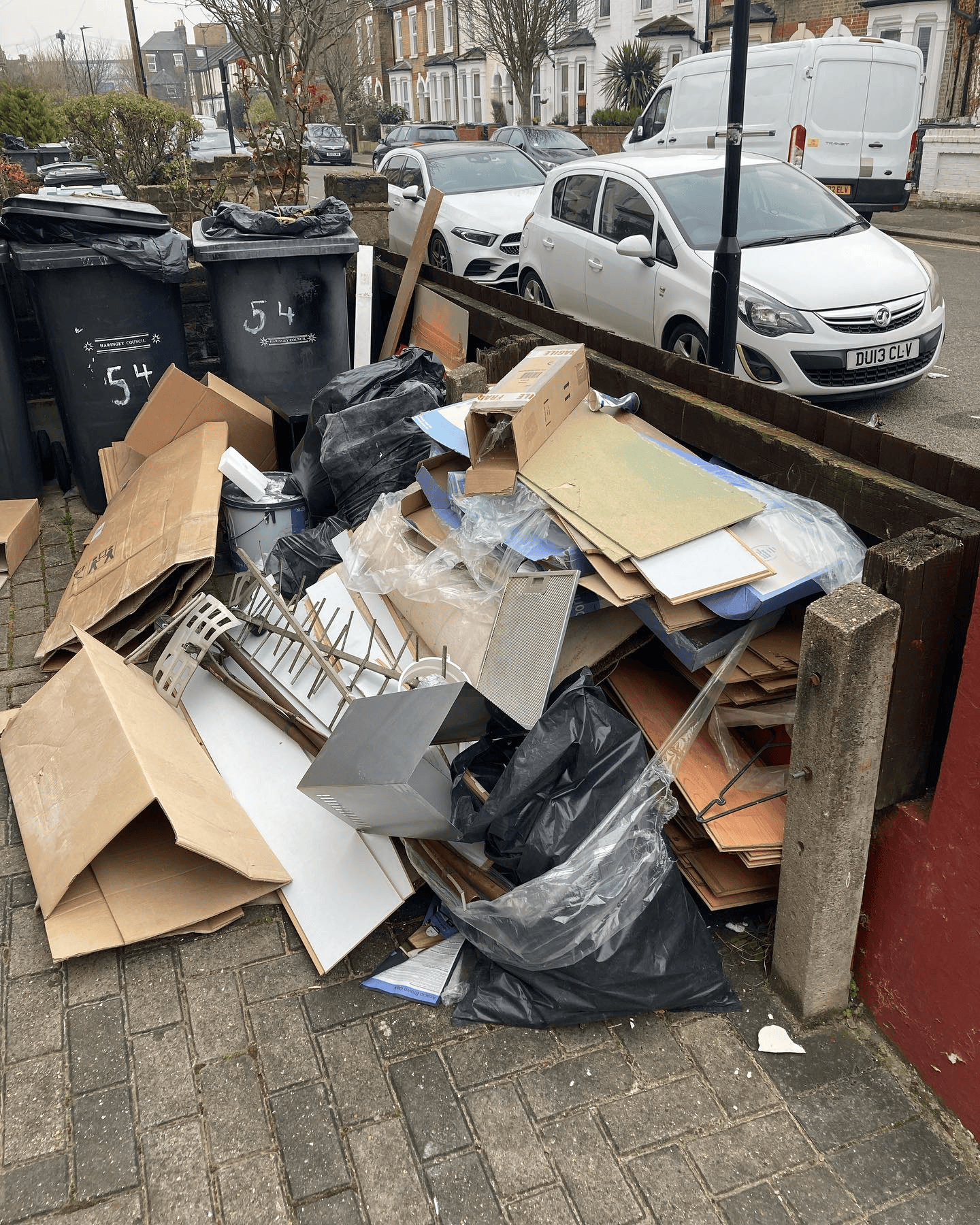
A van needs none of this. We park, load and leave, so nothing stands on the road and there is no licence to sort out.
A loaded van works best when the waste is ready to go all at once. For a kitchen refit, that usually means one of these:
With a van, you do not fill anything. We carry the units, worktops, appliances and boards out from wherever they are, load the van ourselves and take care with door frames, stairs and any new work already in. When the last piece is on, we sweep up where the pile stood. Our strip out waste removal page covers how we clear after kitchens and bathrooms.
If you have a van or a trailer and you did the work yourself, the recycling centre is another route. Love Essex says some centres accept limited DIY waste, as long as you did the work yourself and it comes from your own home. Harlow and Brentwood are among them; Chigwell is not, and it does not accept vans either.
The limits per visit are tight for a whole kitchen. As read on the Love Essex DIY waste page on 1 November 2026, in any single visit you can bring no more than:
Every Essex County Council recycling centre also needs a booking for each visit. For a full kitchen, that adds up to a lot of trips. The DIY limits also only cover work you did yourself, so if a fitter did the strip out, the tip will not take that waste.
Neither route is always cheaper, so the only fair test is to price your own job both ways. To compare like for like:
We price from what you send, looking at how much of the van it fills, the weight, anything that needs handling on its own and how far it is from the kitchen to the road. Appliances such as fridges and freezers are priced on their own, because they have to be kept apart from the general waste. Our rubbish removal prices page explains how a price is built.
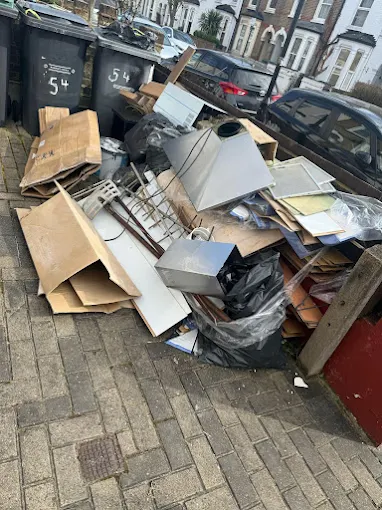
Some customers use both. A skip for the weeks of building work, then a van visit at the end for the appliances, the last of the packaging and anything the skip firm refused.
Whoever clears your old kitchen, you have a duty too. The waste duty of care code of practice on GOV.UK says householders must take all reasonable measures to make sure their household waste only goes to an authorised person. If a fitter offers to take the old units, ask where they are going and check the fitter is a registered waste carrier.
The check takes a minute on the Environment Agency public register. Our waste carrier number is CBDU525129, so you can look us up before anything is loaded.
Often, yes, depending on the size of the kitchen and whether the worktops and appliances are going too. Send a photo of the pile and we will tell you how we would load it.
No. A licence only comes into it when a skip is placed on the road, pavement or verge. We park, load and leave, so nothing is left standing on the highway.
Tell us about them when you send your photo. Fridges and freezers are kept apart from the general waste and priced on their own, so we can give you a full figure before anything is loaded.
Our service is the clearance after the strip out. If you also need fittings taken out, ask when you send your photos and we will tell you what we can do.
Once the old kitchen is out, or once you know what is coming out, take a photo of the pile and send it through our quote form with your town and postcode. You can also WhatsApp it to 07834 527 855. If you are still weighing up a skip, our skip hire alternative page sets out how a loaded van compares.
Book a clearance
Fill in the quote form with a photo and your town, or call us on 07834 527 855, and you will have a price for the job before you book a day.
4.9★★★★★on Google